


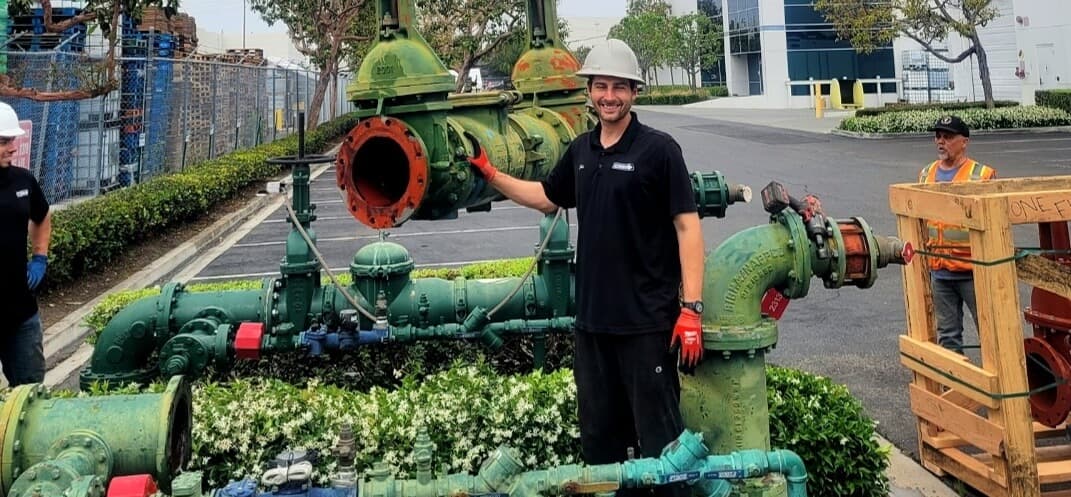
Backflow Preventer Installation Frequently Asked Questions
As a bonded and insured licensed contractor, we help you determine your regulatory requirements, assess hazard levels, select approved backflow prevention assemblies, conduct site preparation and perform the actual backflow device installation in a professional manner that ensures your regulatory compliance and provides the peace of mind you deserve.
Free Backflow Test + Two Year Warranty Included
Backflow Preventer Installation Frequently Asked Questions
Backflow prevention is vital for protecting both individual properties and the public water supply from contamination. Without it, events such as pressure drops in the municipal water supply can cause dirty water to siphon back into clean lines. For example, fertilizers or pesticides from an irrigation system could flow back into the home’s drinking water during such an event. By installing a backflow preventer, you comply with safety regulations and help protect the community from waterborne diseases and pollutants. Backflow devices are required by plumbing codes and water authorities to protect drinking water from contamination due to backpressure or backsiphonage. It helps keep your water supply safe.
Yes, in most cases a permit is required before installing a backflow device, especially for commercial systems or when connecting to municipal water. The process involves submitting a permit application along with detailed plans for review. The permit process helps ensure the device is appropriate for the hazard level and that it’s installed correctly by a licensed professional. Your plumber or backflow technician can usually handle the permitting process on your behalf, but it’s important to confirm with your local building or water department. In most cases, yes. Always check with your local building or plumbing authority.
Installation of approved backflow preventer devices at locations where there is a potential risk of contamination. These devices must be installed at or near the property line or immediately outside the building being served, before the first branch line leading off of the service line. The determination of the appropriate device is made after an inspection by a Cross-Connection Control Specialist.
State, county and local municipal regulations require the installation of approved backflow preventer assemblies (BPAs) to protect the water supply. Backflow preventer assemblies are required in various scenarios, including:
- Irrigation Systems: To prevent contaminants from entering the potable water supply through irrigation lines.
- Commercial and Industrial Properties: Facilities with potential cross-connections, such as those involving chemicals or pressurized systems, are required to install appropriate backflow preventer assemblies.
- Fire Protection Systems: To prevent stagnant water from fire suppression systems from flowing back into the drinking water supply.
- Auxiliary Water Sources: Properties with alternative water sources like wells or cisterns must install backflow preventer devices to prevent cross-contamination.
The location of the backflow preventer depends on the type of system and local regulations, but it is commonly installed outdoors near the main water meter or where the irrigation system connects to the potable water line. It should be placed in an accessible area to allow for regular inspection, maintenance, and testing. Some municipalities also require that it be installed above ground and in a weatherproof enclosure to protect it from freezing or tampering. Usually, it is installed:
- Outside the building near the water meter.
- Above ground for accessibility and to meet code - On irrigation systems between the main supply and sprinkler lines.
Absolutely. The type of backflow prevention device you need depends on the level of risk for contamination in your system. High-risk situations (such as chemical systems, commercial settings, or industrial equipment) require more sophisticated devices like RPZs, while lower-risk situations (like residential irrigation systems) may only need PVBs or DCVs. Regular testing and maintenance are essential to ensure these devices function properly and continue to protect your water supply.
There are several types of backflow preventers, each designed for specific applications and hazard levels. An Atmospheric Vacuum Breaker (AVB) is simple and cost-effective, typically used for lawn irrigation. Pressure Vacuum Breakers (PVBs) are more durable and allow for testing. Double Check Valve Assemblies (DCVAs) are suitable for low to moderate hazard scenarios and offer better protection. Reduced Pressure Zone (RPZ) assemblies offer the highest level of protection and are required for high-hazard systems. Selecting the correct type is critical to ensure both compliance and safety. Common backflow assemblies installed include:
- Atmospheric Vacuum Breaker (AVB) - Pressure Vacuum Breaker (PVB) - Double Check Valve Assembly (DCVA) - Reduced Pressure Zone Assembly (RPZ) Each type is suited for different levels of hazard and system pressures.
Backflow devices can be installed indoors in certain cases, such as in commercial boiler rooms or where outdoor installation isn’t feasible. However, the area must have adequate drainage, accessibility, and protection from leaks or water damage. Indoor installations must comply with building codes and often require additional safety features like catch basins or alarms. An experienced installer can evaluate whether your setup is appropriate for indoor installation.
The cost to install a backflow preventer device varies widely based on several factors such as the type of device required, labor rates in your area, and whether the plumbing system needs any modifications. On average, residential installations range from $200 to $500, while commercial or complex systems can exceed $1,000. Additional costs may include permits, inspections, and the annual testing required by most jurisdictions.
Costs vary by:
- Type of device
- Labor rates - Local regulations Typical range: $200 to $1,000+ (including parts and labor)
Installation typically takes between 1 to 3 hours, depending on the type of backflow device, the location of the plumbing, and the condition of the existing system. Simple installations on residential irrigation systems are relatively quick, while more complex commercial setups or systems requiring trenching, cutting, or additional plumbing work may take longer. Your installer will be able to provide a more accurate timeline after assessing the site.
Typically 1–3 hours, depending on the type of system and location. Complex systems might take longer.
Yes, in many jurisdictions. Local plumbing codes or water authorities often mandate them for irrigation systems, commercial properties, and multi-unit buildings. Contact your local water utility or municipality for specifics. In most municipalities, the installation of a backflow prevention device is a legal requirement, particularly for commercial properties, multi-family residences, and homes with irrigation or fire protection systems. These regulations are often enforced by local plumbing codes or water utilities to ensure public health and safety. Failure to comply can result in fines, citations, or even disconnection of water service. Always check with your local authority to ensure compliance with regional laws.
Property owners are responsible for installing backflow prevention assemblies as required by the city's regulations or county health board Installations must adhere to the state, county, and municipal standards, including specific device types and installation procedures. Failure to install the required backflow preventer devices in compliance with regulations and requirements may result in the discontinuation of water service until compliance is achieved. To ensure the continued effectiveness of backflow preventer assemblies, the following backflow testing and maintenance protocols are also required:
- Certified Backflow Testers: Installations and tests must be conducted by individuals certified by recognized organizations, such as the American Water Works Association (AWWA) California-Nevada Section or the County Health Care Agency.
- Approved Backflow Devices: Only backflow preventer assemblies listed by recognized testing agencies are permitted. The USC-FCCCHR provides a comprehensive list of approved devices. Failure to conduct required backflow testing for properties may lead to water service termination until the device is tested and found compliant.
- Post-Installation or Repair Backflow Testing: Any new installation, relocation, or repair of a backflow device requires immediate testing to confirm correct operation.
- Annual Backflow Testing: Backflow preventer assemblies must be tested at least annually to ensure proper operation.
- Backflow Test Record Keeping: Test results must be submitted to the appropriate regulatory agency to maintain compliance records.
Backflow preventers must be installed by a licensed plumber or certified backflow technician to ensure they meet regulatory standards and function correctly. These professionals are trained to assess the risk level of your system, select the appropriate device, and install it according to code. DIY installation is strongly discouraged, as incorrect installation could cause leaks, device failure, or even violate local plumbing laws, which could lead to fines or service disruptions.
- California State Water Resources Control Board - Uniform Plumbing Code (UPC) - Local municipal codes and regulations enforced by city or county water departments.
- American Water Works Association (AWWA) - University of Southern California’s Foundation for Cross-Connection Control and Hydraulic Research
Failing to install a required backflow preventer can have serious consequences. Water utilities often conduct inspections, and if your property is found to be non-compliant, you may face fines, citations, or water service disconnection until the issue is resolved. More importantly, without a backflow preventer, your property could contaminate the public water supply, posing a significant health risk and exposing you to potential legal liability. Possible consequences:
- Fines or legal penalties - Water service shutoff - Risk of contaminating public water supply - Civil liability
AWWA Certified Backflow Testers Cross Connect Control Specialists
Under the regulatory guidelines of the Cross Connection Control Policy Handbook (CCCPH) which replaces Title 17 of the California Code of Regulations, the American Water Works Association (AWWA) is the only agency recognized under new laws for backflow testing certification. Backflow Test Pros is AWWA Certified Backflow Tester and Approved Cross-Connect Specialist + Certified Backflow Testers with County Health Departments across Southern California. As state licensed contractors, and AWWA cross connection specialists, our team of experienced backflow experts work with city water departments throughout Southern California to protect our water, and prevent backflow contamination.